


Apple Cider Vinegar Rinse for Scalp Buildup: Benefits, Ratio and How to Use It

Updated: Oct 5
An apple cider vinegar rinse for scalp buildup may help loosen some residue before shampooing. If your scalp feels coated or your locs feel heavy after wash day, start by reviewing how you cleanse and rinse. Adding more oil can leave another layer of product behind.
At Reeta’s Organics, clients often ask why their scalp still itches or why they can see white residue in their locs after washing. Those concerns can have different causes. ACV is an optional pre-wash step, not a replacement for shampoo or treatment for a scalp condition.

What Is an ACV Rinse for Scalp Care?
An ACV rinse for scalp care is a diluted mixture of apple cider vinegar applied before or during wash day. People commonly use it to loosen product buildup, refresh an oily scalp, and prepare the hair for shampooing.
ACV is acidic. A study on shampoo pH and hair fiber friction explains why alkaline formulas can increase friction and contribute to frizz or breakage. That research does not establish a safe homemade vinegar ratio or prove ACV treats scalp problems.
That does not mean stronger vinegar gives better results. Straight apple cider vinegar can be too harsh for the scalp. A properly formulated or carefully diluted product is the safer choice.
How to Clear Scalp Buildup Without Adding More Product
Start with a thorough wash and check what remains once your hair is clean and dry. You do not need a vinegar rinse every time you shampoo.
Separate your hair so water and cleanser can reach the scalp. For starter locs or new microlocs, follow your loctician’s braid and band guidance.
If you choose a formulated ACV pre-wash, follow its label directions. Never apply undiluted household vinegar.
Use clarifying shampoo as directed and massage gently with your fingertips.
Rinse thoroughly through the roots and lengths, then dry locs completely.
Use lightweight moisture after washing. If the coating or itching persists, review your routine with a professional.
Ready to simplify wash day? Shop Reeta’s ACV Scalp Mist and pair it with the clarifying cleanser below.
For the cleansing step, shop African Black Clarifying Shampoo.
What Causes Scalp Buildup and When Can an ACV Rinse Help?
Scalp buildup can come from styling products, natural oils, sweat and dead skin. White flakes alone do not tell you the cause. These are four concerns I look at when reviewing a client’s routine.
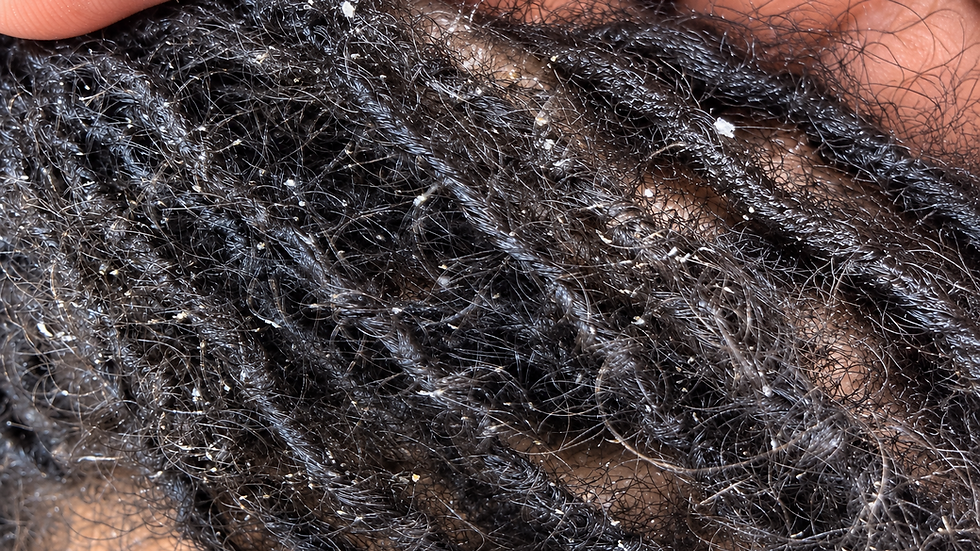
Product Buildup on the Scalp and Hair
Buildup can come from oils, creams, gels, edge control, dry shampoo, sweat, dead skin, and minerals in your water. With microlocs and traditional locs, buildup can become trapped inside the hair. It may appear as a gray or white coating that does not disappear when the hair dries.
When a client tells me, “I keep moisturizing, but my hair still feels dry,” I look at the full routine. Hair coated with residue may not respond the way clean hair does. Adding more oil or cream can make the problem worse. An apple cider vinegar scalp rinse may help loosen that residue before shampooing. You still need a proper clarifying shampoo to wash the loosened material away.
Itchy Scalp Between Wash Days
An itchy scalp can have many causes, including sweat, product residue, dryness, irritation, dandruff, or a skin condition. If the itching comes from buildup, cleansing the scalp may help. If the itching comes with redness, sores, thick scaling, bleeding, pain, or hair loss, do not keep experimenting with products. Schedule an appointment with a dermatologist or qualified scalp specialist. An ACV scalp mist can refresh the scalp, but it should not be presented as a medical treatment.

Flakes and Dandruff
Dry scalp and dandruff are not always the same thing. Dry scalp usually happens when the skin lacks moisture. Dandruff may be connected to oily skin, hair-care habits, yeast on the scalp, seborrheic dermatitis, psoriasis, eczema, or another condition. The American Academy of Dermatology recommends dandruff shampoos containing proven active ingredients such as ketoconazole, selenium sulfide, salicylic acid, sulfur, zinc pyrithione, or coal tar when regular shampooing is not enough.
Apple cider vinegar is not a replacement for medicated dandruff shampoo. It may help remove residue and loose flakes, but persistent dandruff needs the correct diagnosis and treatment.
Benefits of an Apple Cider Vinegar Rinse for Scalp Buildup
A properly diluted ACV hair rinse may provide several cosmetic benefits. It may help:
Refresh an oily or sweaty scalp
Remove residue before shampooing
Leave hair feeling cleaner and lighter
Improve the appearance of dull hair
Prepare natural hair and locs for wash day
The benefit depends on why your scalp is uncomfortable. If the real problem is psoriasis, eczema, seborrheic dermatitis, an infection, or an allergic reaction, an ACV rinse will not correct the underlying condition.
Does Apple Cider Vinegar Help With Dandruff?
There is not enough clinical evidence to recommend ACV as a dandruff treatment.
If your scalp has light flaking caused by residue or an inconsistent cleansing routine, an ACV pre-wash may help your scalp feel cleaner. If you have persistent dandruff, inflammation, thick scaling, or sores, use a proven dandruff treatment or speak with a dermatologist. I would rather tell you the truth than sell you a product as a cure for something it was not designed to treat.
What Is the Correct ACV Hair Rinse Ratio?
There is no single medically established ACV hair rinse ratio for every scalp and hair type. A commonly used cosmetic starting point for a homemade rinse is:
One tablespoon of apple cider vinegar
One cup of water
Never apply straight household apple cider vinegar directly to your scalp. More vinegar does not mean a better cleanse. Test the diluted mixture on a small area first. Stop using it if you experience burning, increased itching, redness, swelling, or soreness.
A 2019 study of diluted ACV soaks found irritation in many participants and no lasting improvement in the measured skin barrier. It studied forearm skin, not scalp rinses, so it does not establish a safe scalp formula.
ACV Rinse vs. Clarifying Shampoo
Clarifying shampoo removes oil and product residue during washing. An ACV pre-wash is optional and may help loosen some residue, but it will not remove every type of buildup. For suspected hard-water deposits, ask about a chelating cleanser formulated for mineral removal.
For product buildup, follow the ACV product’s directions, rinse thoroughly and wash with African Black Clarifying Shampoo. Avoid repeated strong vinegar soaks or scraping your scalp.
How Often Should You Use an ACV Rinse on Your Scalp?
How often you use an ACV rinse depends on your scalp, products, activity level, and wash routine. For most people, an ACV rinse should not be an everyday treatment. Consider using it as an occasional pre-wash when you notice buildup, excess oil, or residue.
You may need it more often if you:
Exercise and sweat frequently
Use several styling products
Have hard water
Wear locs or long-term protective styles
Apply heavy oils or creams regularly
Go long periods between shampoo sessions
You may need it less often if your scalp is naturally dry, sensitive, irritated, or prone to eczema. Pay attention to how your scalp responds. If your hair feels rough or your scalp feels tight after using ACV, reduce how often you use it or stop.
Can You Use an ACV Rinse on Natural Hair?
Yes, a properly diluted ACV rinse can be used on curly, coily, and 4C natural hair. The key is not overusing it. Natural hair already needs thoughtful moisture care. Repeated exposure to an overly strong acidic mixture can leave the hair feeling rough or dry.
Use the rinse as part of wash day, rinse thoroughly, shampoo as needed, and follow with the moisture routine that works for your hair. For dry natural hair, your routine may include a leave-in conditioner, lightweight oil, and cream after cleansing. You can learn more in Reeta’s guide to the LOC Method for natural hair.
Is an ACV Rinse Safe for Locs and Microlocs?
An ACV rinse can be used on traditional locs, microlocs, Sisterlocks, braidlocs, and other interlocked systems when applied correctly. The biggest mistake is soaking the hair in a strong homemade vinegar mixture and assuming that it will remove everything. Buildup trapped inside locs still needs to be rinsed and shampooed out.
For locs and microlocs:
Apply the ACV product mainly to the scalp and areas with visible buildup.
Massage gently with your fingertips.
Do not scratch the scalp with your nails.
Rinse thoroughly.
Follow with a clarifying shampoo.
Rinse until the water runs clean.
Dry the locs completely.
New microlocs may need to be braided and banded before washing to reduce slippage and unraveling. If you are unsure, ask your loctician before changing your wash routine. You can also read Reeta’s complete guide to maintaining microlocs naturally.
Should You Mix Baking Soda and ACV for Hair?
I do not recommend turning your scalp into a home chemistry experiment. Baking soda is highly alkaline, while apple cider vinegar is acidic. Using both does not automatically create a balanced or scalp-safe treatment. Extreme pH levels can irritate the scalp and affect the hair fiber.
If you need a deeper cleanse, use a properly formulated clarifying shampoo. You will have more control over the process than mixing strong kitchen ingredients and hoping you get the ratio right.
Can ACV Make Your Hair Grow?
ACV hair growth is a popular search, but there is not enough evidence to say that apple cider vinegar directly grows hair. A clean scalp supports a better hair-care routine. Removing buildup may help you keep the scalp clean and notice problems sooner. That is different from claiming ACV activates hair follicles or treats hair loss.
If you are experiencing sudden shedding, bald areas, scalp pain, thinning edges, or changes in density, schedule an evaluation. Hair loss can have several causes, and the correct response depends on the cause.
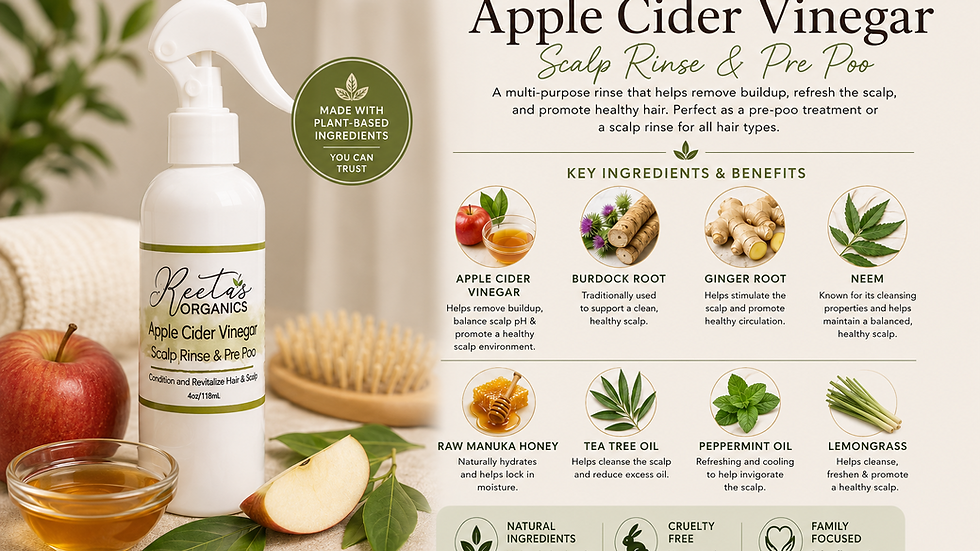
Homemade ACV Rinse vs. a Ready-to-Use ACV Scalp Mist
A homemade rinse may cost less, but it comes with a few challenges. You have to measure it correctly. You need to dilute it every time. It can be messy to pour over the scalp. The vinegar smell can be strong. Making the mixture too concentrated can also cause irritation.
Reeta’s Organics Apple Cider Vinegar Herbal Scalp Mist gives you a more controlled way to apply ACV directly where you need it. The 4-ounce mist is made with organic and vegan ingredients, herbs, and botanicals. It is coconut oil-free and designed for natural hair, locs, microlocs, and low-porosity hair.
Please note that the product contains oils or butters from tree nuts. Do not use it if you have a tree-nut allergy. The spray application also helps you focus on the scalp without saturating your entire head or pouring a homemade mixture down your face and neck.
How to Use Apple Cider Vinegar for an Itchy Scalp
If itching is connected to product residue, cleansing may help. If your scalp is already sore, inflamed or broken, skip ACV and seek medical advice. For Reeta’s ready-to-use ACV Scalp Mist, follow the label and use it as a pre-wash treatment:
Separate the hair so you can reach the scalp.
Spray the mist directly onto areas with buildup or discomfort.
Massage gently with your fingertips.
Allow the product to work according to the label directions.
Rinse thoroughly.
Follow with a clarifying shampoo.
Condition or moisturize according to your hair type.

This is not your daily moisturizer. If your scalp needs lightweight hydration between washes, use a water-based product such as Reeta’s Green Tea and Rosewater Spray.
The ACV mist helps prepare the scalp for cleansing. The rosewater spray helps maintain moisture after cleansing. They serve different purposes.
ACV Scalp Care in Orlando and Lake Mary
At Reeta’s Organics in Lake Mary, we work with natural hair, locs, microlocs, protective styles, and scalp concerns from clients throughout the Orlando area. Florida heat and humidity can make sweat, oil, and product buildup show up faster. That does not mean you need to wash your hair every day or coat your scalp with more oil. It means your cleansing schedule should match your scalp, lifestyle, and hairstyle.
Our products are handmade for textured hair and are available locally in Lake Mary. We also ship natural hair and loc-care products throughout the United States.
Not sure which routine fits your hair? Book a natural hair consultation in Lake Mary or virtually. We can review your products, wash routine and loc-care habits. Persistent redness, sores, pain or unexplained hair loss should be evaluated by a dermatologist.
Frequently Asked Questions About ACV Rinses
Is an ACV rinse the same as shampoo?
No. An ACV rinse may loosen residue, but shampoo removes the loosened oil, dirt, dead skin, and product buildup. Use the two as parts of the same cleansing routine when needed.
Can I leave apple cider vinegar on my scalp overnight?
I do not recommend leaving household apple cider vinegar on your scalp overnight. Prolonged exposure can increase the risk of irritation. Follow the directions provided with any formulated scalp product.
Can ACV help an itchy scalp?
It may help when the itching is connected to product buildup or excess oil. It will not correct every cause of itching. Stop using it if the itching becomes worse.
Can I use an ACV rinse on color-treated hair?
Use caution. Color-treated hair may already be dry or fragile. Ask your color professional whether an acidic rinse fits your current maintenance plan.
Can I use ACV on starter locs?
Speak with your loctician first. New locs can unravel or slip during washing. Your loctician may recommend braiding and banding before the rinse.
Does an ACV rinse remove buildup from locs?
It may help loosen buildup, but the hair must still be shampooed and rinsed thoroughly. Severe buildup may require professional loc detox or repair services.
What should I do if ACV burns my scalp?
Rinse it out immediately and stop using it. If burning, redness, swelling, or pain continues, contact a medical professional.
Final Thoughts on Using an ACV Rinse for Scalp Buildup
An ACV rinse for scalp care can be useful when your goal is to loosen buildup, refresh the scalp, and prepare your hair for shampooing. It is not a replacement for regular cleansing, medicated dandruff shampoo, or professional care for persistent scalp problems.
Keep the routine simple. Use ACV carefully. Follow with a thorough shampoo. Choose lightweight products after cleansing, especially if you wear microlocs or traditional locs. If you want the benefits of an ACV pre-wash without mixing and measuring a homemade rinse, try Reeta’s Organics Apple Cider Vinegar Herbal Scalp Mist. Your scalp does not always need more product. Sometimes it needs a clean start.


Comments